

Team development at Elevated Talent helps intact teams in Vancouver build the trust, communication, accountability and shared purpose that high performance depends on. Using Gallup CliftonStrengths and facilitated work on real team challenges, our half-day and full-day programs go beyond a one-time team-building event to change how your team operates. Pair it with executive coaching for the team leader or book a team development consultation.
What Is Team Development?
Team development is a structured program that helps an existing team improve how it works together. It looks at trust, communication, accountability, decision-making, collaboration and shared goals, then helps the team agree on practical changes to the patterns that hold it back.
The aim is a team that understands its strengths, works well together and creates the conditions for high performance.
Teams That Benefit From Team Development
- Senior leadership and executive teams
- New teams, or established teams with a new leader
- Teams going through growth, restructuring or major change
- Teams with unclear priorities or communication breakdowns
- Teams experiencing low trust, unresolved tension or inconsistent accountability
- Teams that struggle to make and commit to decisions
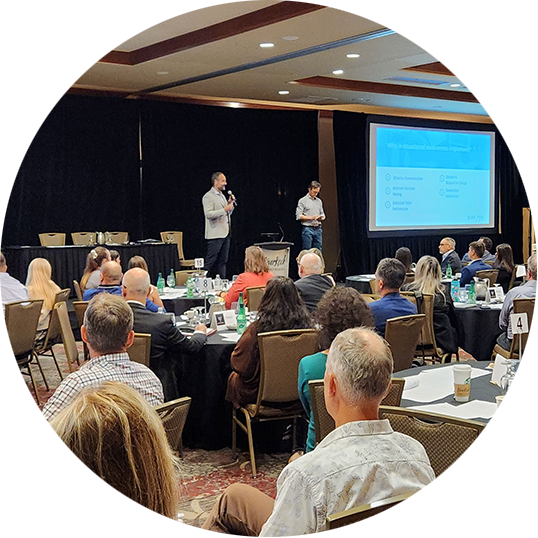
Team Development vs Team Building
Team building strengthens relationships through shared experiences such as a social event or activity. Team development examines how the team actually operates day to day and addresses the behaviours and processes that affect performance. The two can complement each other, but only team development is designed to produce lasting change in how the team works. For a deeper comparison, read why team building alone falls short.
CliftonStrengths Team Workshops
Elevated Talent uses the Gallup CliftonStrengths assessment (formerly StrengthsFinder) to show how each person naturally thinks, feels and behaves. Individual debriefs and a team strengths profile give the team a shared language for discussing contributions, blind spots, communication styles, friction points and how people respond under pressure.
CliftonStrengths is one possible foundation. The final design always depends on your team’s goals.
Organizations that Receive Training Report
7% - 23%
Higher Employee Engagement
8% - 18%
Increased Performance
20% - 73%
Lower Attrition
*Gallup research
What Makes a Team High-Performing?
Our programs use a model of team success built on four elements:
A Model of Team Success
Four connected foundations support team performance:
Connection
Connection: trust and understanding between team members
Communication
Communication: open, direct and respectful exchange of ideas and feedback
Collaboration
Collaboration: clear roles, shared goals and decisions the team commits to
Celebration
Celebration: recognizing progress and the contributions that drive results
Half-Day and Full-Day Team Development Programs
Choose a focused session or a full day of deeper work. Both formats are tailored to your team and its goals.
Half-Day Session
A focused workshop on individual and collective strengths, team dynamics and better ways of working together.
The half-day package includes:
- Preparatory and ongoing communication with participants.
- 30-minute calls with individual team members to discuss each member’s CliftonStrengths results.
A Half-Day Workshop, Where Team Members:
- Get to know each other better through ice-breaker exercises.
- Develop awareness about each team member’s strengths and blind spots.
- Discuss strategies to leverage one another’s strengths to become more effective.
- Develop an understanding about the team’s collective strengths, potential blind spots and friction points, and ways to work more effectively under pressure.
- A designated coach to deliver ongoing support, communication, and workshop facilitation.
- A debrief and support after the program’s completion.
Full-Day Session
Everything in the half-day session, plus topics such as purpose, values, communication, accountability, feedback, decision-making, conflict and culture. Content is finalized with the team’s sponsor.
The full-day package includes the half-day package, plus facilitated discussion of:
- What are our organizational values, and how do we practice them on a day-to-day basis?
- What are the organizational vision and mission?
- How do we hold each other accountable?
- How do we deal with failure and disappointments?
- How do we give each other feedback?
- How do we best communicate with each other? How about when under pressure?
- How do we share information?
- How do we make decisions?
- How do we acknowledge each other and celebrate wins?
The key topics will be reviewed and finalized with you.
Our Team Development Process
Every engagement is designed around your team’s goals, dynamics and organizational context. Our process moves through four stages:
Step 1: Discovery
We meet the team’s sponsor to understand the business context, desired outcomes and team dynamics.
Step 2: Preparation
Team members complete assessments such as CliftonStrengths and, where useful, individual conversations.
Step 3: Facilitated session
The team works on its real challenges and makes practical agreements about how it will operate.
Step 4: Follow-up
Optional follow-up sessions review progress and keep the agreements alive.
Why Choose Elevated Talent for Team Development in Vancouver
Our facilitators are credentialed coaches who have worked with teams at organizations including the Port of Vancouver, where departments took part in team coaching, and Hogan Lovells. Sessions are available in person in Vancouver or virtually.
Team development is often strongest as part of a wider plan. Many organizations combine it with leadership training programs for managers or a 360 leadership assessment for the team leader. Read what clients say in our client reviews, then book a consultation to discuss your team.
Team Coaching for Conflict and Low Trust
Team development can help a team with conflict or low trust when the team and its leader are willing to address the underlying issues openly. The work identifies unproductive patterns and builds clear agreements about communication, conflict and accountability. Some situations call for HR support, mediation or a workplace investigation instead, and we will tell you if team development alone is unlikely to help.
Team Development FAQ
What is team development?
Team development helps an intact team improve how its members work together. It focuses on the conditions required for sustained performance, including trust, communication, accountability, decision-making, collaboration, and alignment around a shared purpose.
Rather than treating the session as a one-time team-building activity, we help teams better understand their patterns and agree on practical changes to how they work together.
What types of teams benefit from team development?
Team development can benefit senior leadership teams, newly formed teams, established teams, and teams navigating growth, restructuring, new leadership, or organizational change.
It can also be useful when a capable team is experiencing unclear priorities, communication breakdowns, low trust, unresolved tension, inconsistent accountability, or difficulty making decisions together.
How is team development different from team building?
Team-building activities often focus on strengthening relationships through a shared experience. Team development goes further by helping members examine how the team actually operates and address the behaviours, processes, and dynamics affecting performance.
The two can complement each other, but team development is more directly connected to how the team communicates, makes decisions, manages conflict, holds members accountable, and delivers results.
How does CliftonStrengths fit into your team development programs?
We use the Gallup CliftonStrengths® assessment, formerly known as StrengthsFinder, to help team members understand their natural patterns of thinking, feeling, and behaving.
Individual debriefs and the team’s collective strengths profile create a practical foundation for discussing contributions, blind spots, communication preferences, friction points, and how the team operates under pressure. CliftonStrengths is one possible foundation for an engagement; the final design depends on the team’s objectives.
What happens before, during, and after a team development session?
Before the session, we meet with the team’s sponsor to understand the business context, desired outcomes, and current team dynamics. Depending on the program, participants may also complete assessments or participate in individual discovery conversations.
During the session, the team works on its real challenges and develops practical agreements or commitments. Follow-up support can be included to help the team review progress and reinforce the changes it has agreed to make.
Do you offer half-day and full-day team development programs?
Yes. Half-day sessions provide a focused exploration of individual and collective strengths, team dynamics, and practical ways of working more effectively together.
Full-day sessions provide more time to address additional topics such as shared purpose, organizational values, communication, accountability, feedback, decision-making, conflict, and team culture. The content is finalized with the team’s sponsor before the session.
Can team development help a team experiencing conflict or low trust?
Yes, provided that the team and its leader are willing to address the underlying issues openly. We can help teams identify unproductive patterns, discuss their impact, and develop clearer agreements for communication, conflict, and accountability.
Some situations may also require support from HR, mediation, workplace investigation, or another specialized process. We will be transparent if team development alone is unlikely to address the issue.
Can team development be delivered virtually?
Yes. Team development can be delivered virtually or in person. The design, activities, and timing are adapted to the delivery format and the team’s needs.
Satisfied people all over the globe
Our values drive not only our culture and how we work with clients, but also how we live our lives. We partner with our clients.