
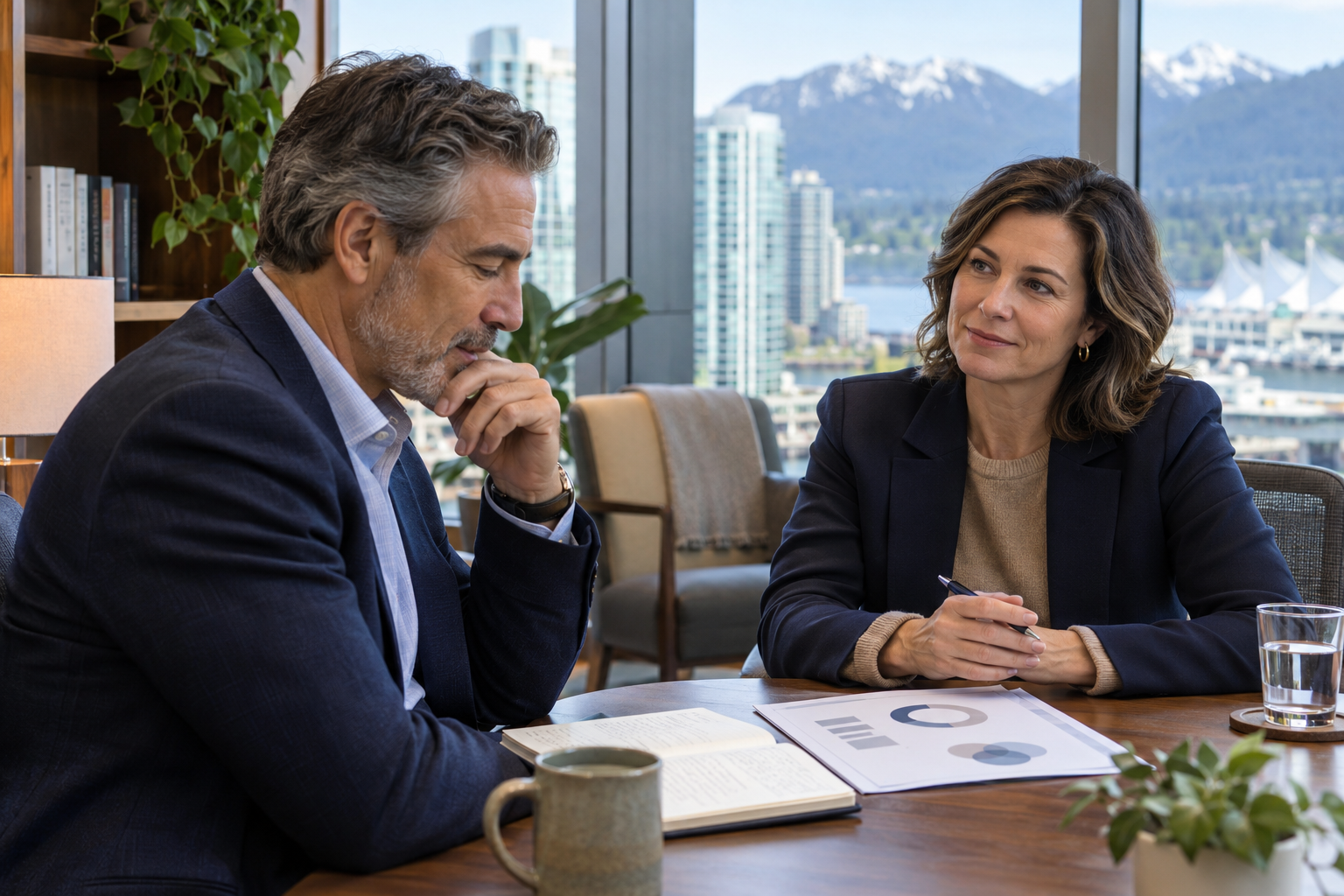
360-degree feedback gives a senior leader a confidential view of how they are experienced by their manager, peers, direct reports, board members and key partners. Feedback is gathered through confidential interviews or a validated survey, synthesized into themes, and reviewed with a coach in a debrief that leads to a development plan. Here is what to expect from a 360 leadership assessment in Vancouver, step by step.
Why Senior Leaders Need 360 Feedback
The more senior a leader becomes, the less candid feedback they tend to receive. People are cautious with the boss, and peers may avoid difficult conversations. Over time, the gap between how a leader intends to come across and how they are experienced can grow.
A 360 closes that gap by collecting views from people in different working relationships and identifying the patterns that matter.
Who Gives Feedback
Feedback comes from people who have worked closely enough with the leader to comment meaningfully. That usually includes:
- The leader’s manager or CEO
- Peers across the organization
- Direct reports
- Board members, where relevant
- Key partners and other stakeholders
An interview-based 360 typically includes 8 to 15 conversations, with the final mix set by the leader’s role and objectives.
Interview-Based 360 vs Survey-Based 360
Interview-Based 360
A coach conducts confidential one-on-one conversations using a guide customized to the leader’s context. This approach gives depth: specific examples, context and nuance that a rating scale cannot capture. It suits senior leaders who want a highly personalized assessment.
Survey-Based 360
A validated questionnaire, such as the Leadership Circle Profile or Hogan 360, gives statistically valid, norm-referenced data and makes it easier to compare results across several leaders. The Leadership Circle Profile links internal beliefs to external behaviours, while the Hogan suite covers strengths, derailers, values and leadership potential.
The right choice depends on the leader’s goals and the organization’s needs.
How Confidentiality Works
Comments are synthesized into themes and not attributed to individuals. Before the process starts, both the leader and the people giving feedback should understand how confidentiality works, including any limits to anonymity when the stakeholder group is very small.
The leader receives the report and reviews it privately with the coach. If an organization sponsors the 360, what is shared with a manager, HR partner or board is agreed in advance and usually limited to high-level themes and development priorities.
What Happens in the Debrief
After feedback is collected, the coach analyzes the results and writes a report covering key themes, strengths, development areas and representative quotes. The leader then attends a 90-minute debrief to make sense of the findings and choose a small number of priorities. Some leaders also present a 30-minute summary to their board or executive sponsor.
A 360 Is Not a Performance Review
A 360 assessment is developmental. It is not a formal employment evaluation, and it should complement, not replace, an organization’s performance management. Keeping that distinction clear encourages honest feedback.
Turning Feedback Into Change
Feedback on its own rarely changes behaviour. The leaders who benefit most use their 360 as the starting point for a development plan, often supported by executive coaching to practise new approaches and sustain them. A follow-up 360 later can show what has changed.
How to Prepare for a 360 Review
A little preparation helps a leader get more value from a 360. Before the process starts:
- Clarify what you want to learn. The initial meeting with your coach sets learning goals and scope, so think about the questions you most want answered.
- Choose a balanced group of stakeholders. Include people who see your work from different angles: your manager, peers, direct reports, board members and key partners.
- Tell stakeholders why you are asking. A short note explaining that the process is developmental and confidential encourages candid input.
- Agree who sees what. If your organization is sponsoring the 360, confirm in advance what will be shared beyond you and your coach.
- Plan for what comes next. Decide whether you want follow-up coaching to turn the findings into lasting change.
Our Leadership Insights service supports each of these steps.
What You Receive From a 360
At Elevated Talent, every 360 option includes an anonymized feedback report on key themes, strengths and growth areas, representative quotes and qualitative insights from stakeholders, and a 90-minute debrief with a certified coach. Leaders can add an optional 30-minute summary presentation to board members or executive sponsors, and optional ongoing one-on-one coaching for behaviour change and accountability.
Is a 360 Right for You?
A 360 is most useful when you are stepping into a senior role, want candid feedback that is hard to get internally, face recurring relationship or communication challenges, or are preparing for coaching. It works best when you are open to what you hear and ready to act.
To discuss a 360 for yourself or a leader on your team, book a 360 feedback consultation or contact our Vancouver coaching team.
360 Feedback FAQs
What is 360-degree feedback?
360-degree feedback is a process that gathers input about a leader from people who work with them in different capacities, such as their manager, peers, direct reports, board members and key partners. Comparing these perspectives reveals consistent patterns in strengths, blind spots, communication, trust and influence that self-reflection or a single source of feedback can miss.
How many people should give feedback in a 360?
An interview-based 360 at Elevated Talent typically includes 8 to 15 confidential stakeholder interviews. The final number and mix depend on the leader’s role, objectives and working relationships. The goal is enough perspectives to identify reliable patterns while keeping each voice meaningful.
Is 360 feedback anonymous?
360 feedback is confidential. Comments are synthesized into themes and are not attributed to individuals. Confidentiality is explained to the leader and to the people giving feedback before the process starts, including any limits to anonymity when the stakeholder group is very small.
What questions are asked in a 360 interview?
In an interview-based 360, the coach uses a guide customized to the leader’s context and learning goals. Questions typically explore the leader’s strengths, blind spots, communication, trust, influence, relationships and overall impact, and ask for specific examples. Because the guide is tailored, the conversation focuses on what matters most for that leader’s role.
What is the Leadership Circle Profile?
The Leadership Circle Profile (LCP) is a research-validated 360 assessment that links a leader’s internal beliefs and assumptions to their external leadership behaviours. It provides norm-referenced data, which makes it useful for comparing results and for organizations assessing several leaders consistently.
What is a Hogan 360?
Hogan 360 is part of the Hogan assessment suite, a set of validated tools that cover strengths, derailers, values and leadership potential. Paired with the Hogan personality assessments, it helps leaders understand both how they tend to behave and how others experience them.
Can 360 feedback be used for performance reviews?
A 360 used for leadership development should not be used as a performance review. It is a developmental process, not a formal employment evaluation, and it should complement rather than replace an organization’s performance management. Keeping the two separate encourages honest, constructive feedback.
What should I do after receiving my 360 report?
After receiving your report, review it in a debrief with your coach and choose a small number of development priorities. At Elevated Talent, this is a 90-minute debrief. Many leaders then continue with executive coaching to practise new approaches, and a follow-up 360 later can show what has changed.
When is the best time to do a 360 review?
The best time for a 360 is when a leader is preparing for or adjusting to a senior role, needs candid feedback that is hard to get internally, faces recurring relationship or communication challenges, or is starting a development plan or coaching. A follow-up 360 after a period of development is also useful for reviewing progress.
Can a whole leadership team complete 360 assessments?
Yes. When several leaders are assessed, a standardized, survey-based 360 such as the Leadership Circle Profile or Hogan 360 provides consistent, norm-referenced data across the group. Interview-based 360s remain the stronger choice when an individual senior leader needs depth, context and specific examples.
Who receives the 360 feedback report?
The leader receives the report and reviews it confidentially with their coach. If an organization sponsors the 360, what is shared with a manager, HR partner, executive sponsor or board is agreed in advance. Any sponsor conversation focuses on high-level themes and development priorities rather than individual comments.
How do I arrange a 360 review in Vancouver?
Book a consultation to discuss your goals and whether an interview-based 360 or a validated tool such as the Leadership Circle Profile or Hogan 360 fits best. Book a 360 feedback consultation or call 1-604-719-4446.